

Industry News
Can people read websites in Braille?
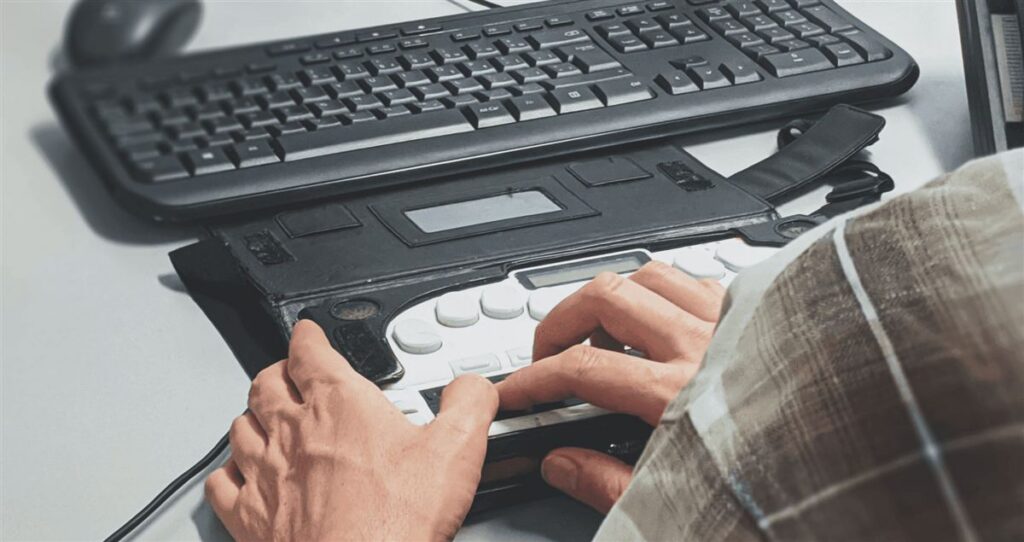
In recent years the Braille system has gone through a digital transformation. Just 15 years ago I learned to type in Braille using a Perkins Brailler, a mechanical hunk of metal closer to a typewriter than to any modern technology.
Now Braille is a very modern form of communication. Braille displays can interface with computers and smartphones, and Braille notetakers can act as fully functioning computers, with Braille as the primary input and output method.
That raises an interesting question. How does someone use a website in Braille?
First, what is Braille?
Braille is a tactile reading and writing system. It represents letters via a raised dot alphabet that people who are blind or visually impaired read through touch. Braille can represent any language, and with practice people use it to read and write independently.
The system was invented by Louis Braille and popularised by influential figures such as Helen Keller.
You do not need a screen to use websites in Braille
An important thing to remember is that Braille devices do not usually display information visually. If I open a website on a Braille notetaker, all the content is shown in Braille for me to read. Someone may well be reading this blog post on a Braille display right now, feeling it rather than seeing it.
You navigate a website using the buttons on your Braille device, so in theory you should be able to reach any menu or interactive element the same way a sighted user can.
Are all websites accessible in Braille?
Unfortunately not. If a website is inaccessible with a screen reader, it is also inaccessible via Braille. The two depend on the same underlying structure.
Since June 2025, organisations offering consumer-facing digital services in the European Union have had to meet accessibility requirements under the European Accessibility Act, or face investigation and penalties.
Braille matters for people who are blind, and it matters enormously for people with dual sensory loss such as deafblindness. Often it is one of the only ways they can read or write independently. Our hope is that the European Accessibility Act means people with disabilities get the same level of access as everyone else to the information the internet provides.
Vially can help
If you are ready to make your organisation more accessible, are unsure whether you comply with the laws that apply to you, or simply have questions you would like answered, we are here to help.