Understanding the Problem

While this seems straightforward in theory, we quickly began to realise that the information we thought need be covered under “private listening”, wasn’t strictly covered under “personal data”.
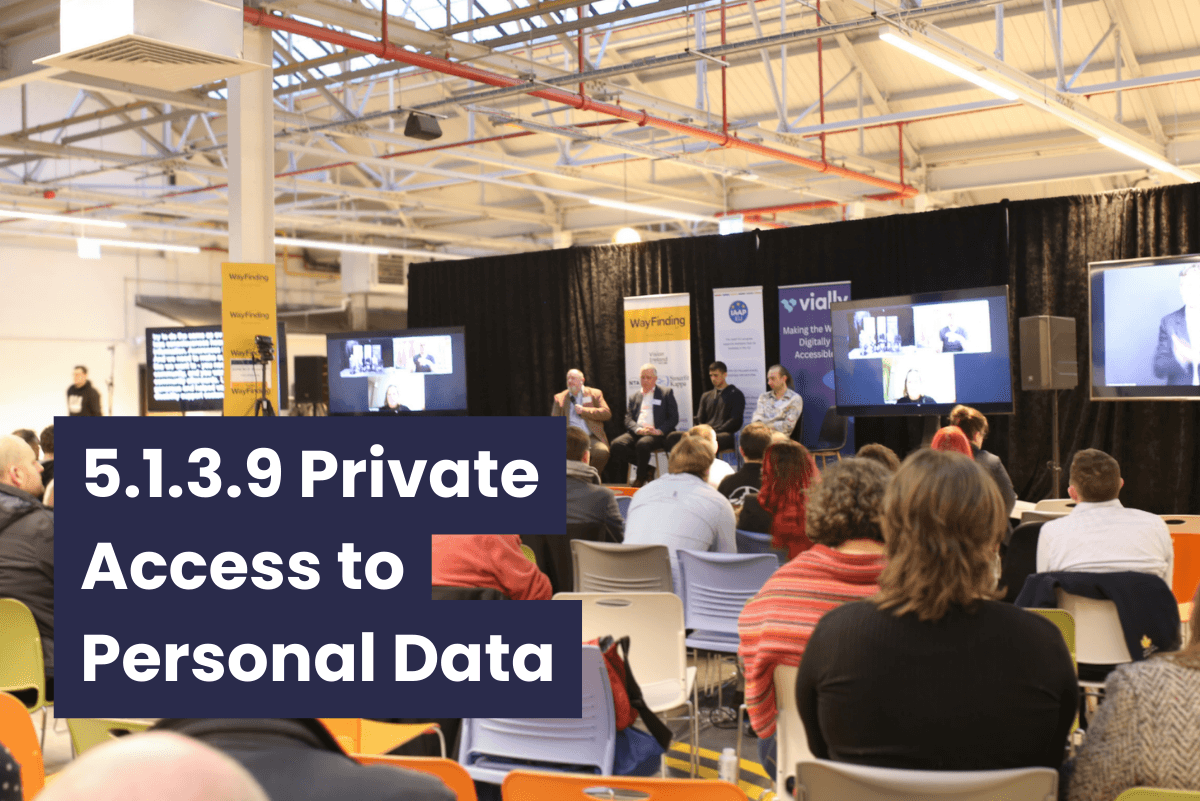
What We Discussed
We discussed practical examples, such as a user using an ATM, a clear area where users would not want any data to be spoken out without private listening.
It was clear to us any confidential or personal information that needed to be spoken to the user, needs to only be through private listening, but does all this data fall under “personal data”?
While data connecting directly to us such as our name, address etc is personal data, what about all of our banking information?
Important Questions to keep in mind
This raised important questions:
Is it sufficient to rely on privacy policies to determine what must be delivered through private listening?
In real world scenarios, does this approach protect users from their confidential information being spoken aloud?
This accessibility requirement should not need to depend on interpretations of privacy policies which can leave this ambiguity. The standard should clearly define what information needs to be covered under this clause.
Results about Section 5.1.3.9
Section 5.1.3.9 clearly intends to protect users from public disclosure of information that should remain private, however, our discussions clearly showed that a more concise terminology is needed here to cover all a user’s private data.
The workshop gave a clear view that accessibility standards are not perfect and need to continue to evolve.
As technology becomes more prevalent in our lives, holding more of our own data than ever before, ensuring that genuine private access to our data regardless of the ICT that we use needs to be protected.

Vially Can Help

If you are:
- Ready to make your company more accessible,
- Are unsure if your company complies with required laws,
- Or just have questions you’d like answered.
We are here to help
Contact Us