
Compliance
Understanding the POUR Principles of Accessibility
What is POUR?
The Web Content Accessibility Guidelines (WCAG) are internationally agreed standards established to help content authors and developers create web content, whether a website, web application or other digital technology, with accessibility in mind.
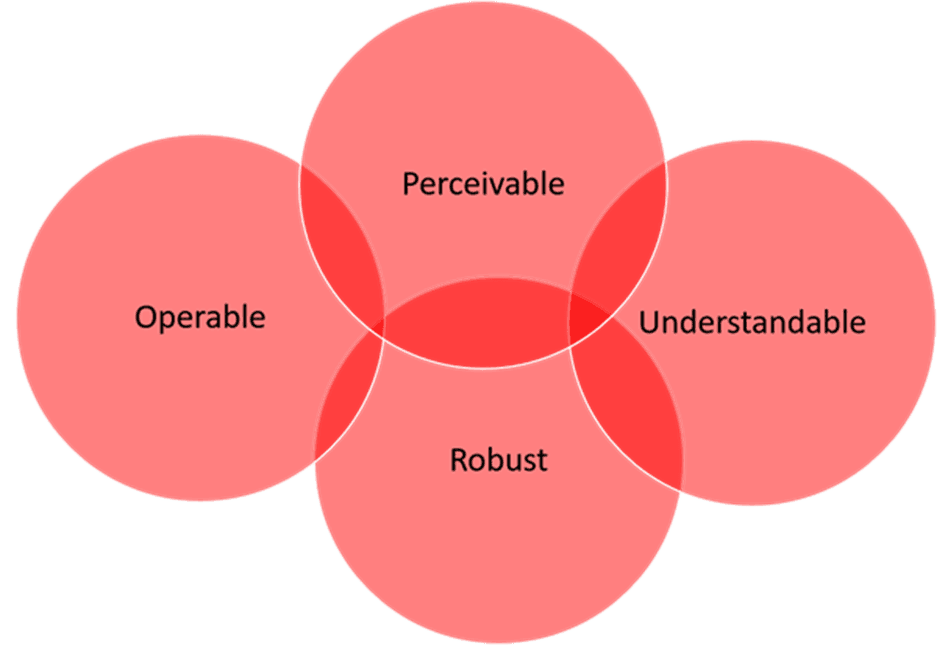
There are four main guiding principles of accessibility upon which the WCAG have been built. These four principles are known by the acronym POUR: Perceivable, Operable, Understandable, and Robust.
POUR is a way of approaching web accessibility by breaking it down into these four main aspects. Let us take a more in-depth look at what each of these principles means.
The four principles of accessibility
Perceivable. Information and user interface components must be presentable to users in ways they can perceive.
Example: text alternatives. Provide text alternatives for any non-text content so that it can be changed into other forms people need, such as large print, braille, speech, translations, or simpler language.
Operable. User interface components and navigation must be operable.
Example: keyboard accessible. Make all functionality available from a keyboard or keyboard interface, so that people with disabilities are able to operate websites without needing a mouse.
Understandable. Information and the operation of user interfaces must be understandable.
Example: labels and instructions. Labels and instructions are provided to users whenever content requires user input, such as sign up or login forms.
Robust. Content must be robust enough that it can be interpreted reliably by a wide variety of user agents.
Example: maximise compatibility with current and future user agents, including assistive technologies, by ensuring content created using markup languages is coded correctly.
POUR and the three levels of conformance
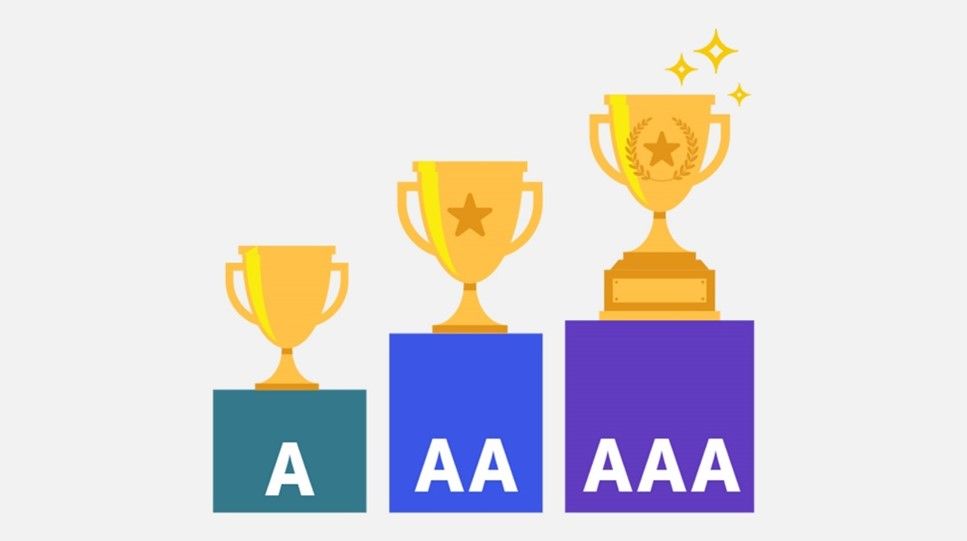
These guidelines work with success criteria organised into three levels: A, AA and AAA. Level A and Level AA have been adopted by various international standards and legal requirements.
Level A criteria are the highest priority and are typically the easiest to fulfil. If your product satisfies all of the Level A criteria, the entire site is considered to be Level A compliant. Your site will be accessible to many, though often with considerable extra effort on the part of those living with substantial disabilities.
Level AA criteria yield a truly equivalent experience for most users. By fulfilling all of the Level A and Level AA criteria, your site is considered Level AA compliant. This level will generally result in content being accessible to most users, though perhaps not with equivalent access for all.
Level AAA provides advanced accessibility criteria. Sites that fully comply with this level are rare. More typically, companies pick and choose Level AAA criteria to follow depending on the content and audiences of a given site.
For more detail, read our post on the difference between WCAG A, AA and AAA.
Vially can help
If you are ready to make your organisation more accessible, are unsure whether you comply with the laws that apply to you, or simply have questions you would like answered, we are here to help.