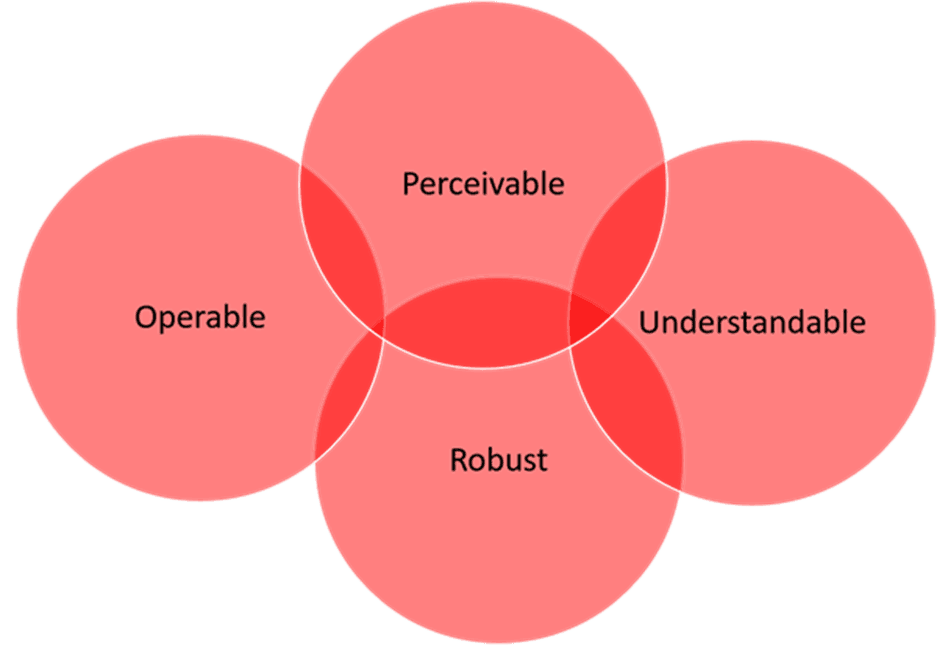

Compliance
What is the difference between WCAG A, AA and AAA?
The Web Content Accessibility Guidelines (WCAG) were developed by the World Wide Web Consortium (W3C) and are widely accepted as the go-to standard for digital accessibility conformance. At the core of WCAG are testable requirements known as success criteria.
Understanding WCAG levels
There are 78 success criteria in total, with each one assigned a level.
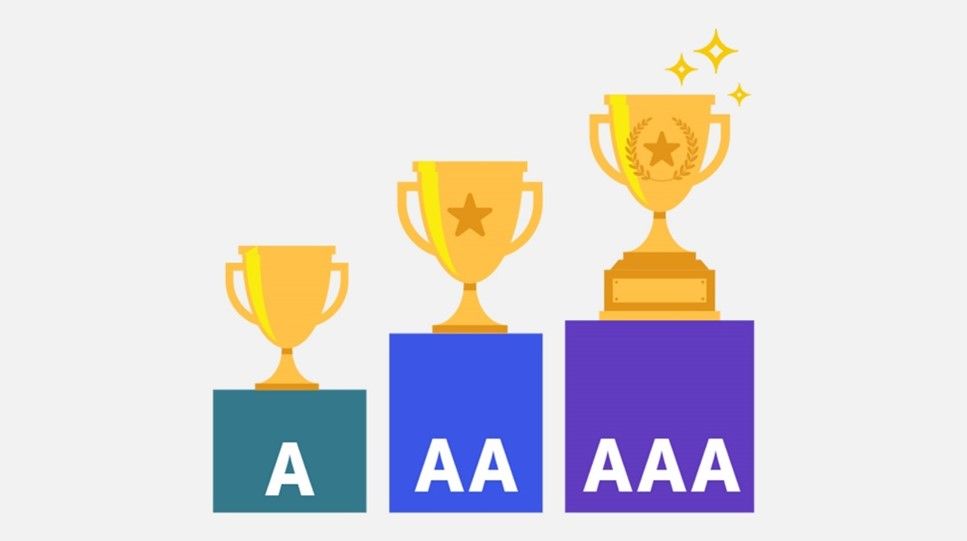
There are three levels in WCAG 2.1: Level A (the lowest level), Level AA, and Level AAA (the highest level). These are usually pronounced as ‘single A’, ‘double A’, and ‘triple A’.
Conformance at higher levels indicates conformance at lower levels. For example, by conforming to AA, a web page meets both the A and AA conformance levels. Most organisations set their standards at level AA because it is both achievable and meaningful, without being too disruptive to the design and development process of a website.
The three conformance levels
WCAG Level A: basic accessibility
Considered the least strict, Level A success criteria are essential for every website. If your website does not conform with WCAG Level A, it may have serious accessibility issues that prevent users with disabilities from using it.
At this level there are 30 criteria that organisations must meet. Examples include:
- Non-text content (images and videos) must have a text equivalent.
- Users must be able to access content using a keyboard only.
- Forms must include labels or instructions, so users know what is expected of them.
- Assistive technologies, such as screen readers, must be able to access content.
- Information or instructions must not be conveyed through shape, size, or colour alone.
WCAG Level AA: strong accessibility
While Level A covers the basics, Level AA goes further toward making web content accessible for users in a wider variety of contexts. It is for this reason that most accessibility experts recommend this conformance level. At this level, the web page and content satisfy all Level A and Level AA success criteria.
Level AA adds an extra 20 requirements. Examples include:
- Text and background must use good colour contrast, with a minimum contrast ratio of at least 4.5 to 1.
- Content should be organised under clear headings, using a logical order such as H1 followed by H2, H3 and so on.
- Elements that affect navigation should be consistent across the site.
WCAG Level AAA: excellent accessibility
Level AAA is the highest possible conformance level in WCAG, and holds organisations to the highest standard of accessibility. At this level, the web page and content satisfy all Level A, Level AA and Level AAA success criteria. Although Level AAA may not be applicable or realistic for everyone to achieve, organisations should strive to meet as many of its criteria as possible.
Level AAA outlines an extra 28 requirements beyond Level AA. Examples include:
- Contrast ratio between text and background is at least 7 to 1.
- Pre-recorded video content must have a sign language translation.
- Extended audio descriptions should be provided for pre-recorded videos.
AA or AAA: how high should you aim?
Digital accessibility laws vary greatly from country to country. The EU Web Accessibility Directive requires all websites and mobile applications of public sector bodies across member states to conform with WCAG Level AA.
The European Accessibility Act applies to consumer-facing products and services from private companies, and has applied since 28 June 2025.
Accessibility has numerous benefits outside of legal compliance, most notably that you are making your digital content available to all users, including those with a disability. Put simply, it is the right thing to do.